Celebrity Photos Fashion
Showing posts with label race. Show all posts

Wednesday, December 17, 2008

Some Insist Obama Isn't Black, The Snob Insists These People Are Idiots

From The Associated Press:

Pride is the center of racial identity, and some white people seem insulted by a perception that Obama is rejecting his white mother (even though her family was a centerpiece of his campaign image-making) or baffled by the notion that someone would choose to be black instead of half-white.

"He can't be African-American. With race, white claims 50 percent of him and black 50 percent of him. Half a loaf is better than no loaf at all," Ron Wilson of Plantation, Fla., wrote in a letter to the Sun-Sentinel newspaper.

Attempts to whiten Obama leave a bitter taste for many African-Americans, who feel that at their moment of triumph, the rules are being changed to steal what once was deemed worthless _ blackness itself.

"For some people it's honestly confusion," said Favor, the Dartmouth professor. "For others it's a ploy to sort of reclaim the presidency for whiteness, as though Obama's blackness is somehow mitigated by being biracial."

Then there are the questions remaining from Obama's entry into national politics, when some blacks were leery of this Hawaiian-born newcomer who did not share their history.

Linda Bob, a black schoolteacher from Eustis, Fla., said that calling Obama black when he was raised in a white family and none of his ancestors experienced slavery could cause some to ignore or forget the history of racial injustice.

"It just seems unfair to totally label him African-American without acknowledging that he was born to a white mother," she said. "It makes you feel like he doesn't have a class, a group."

1) People should be allowed to DEFINE THEMSELVES. Barack Obama is an American. He is biracial, but traditionally our country has viewed anyone with African heritage or appearance is a black person. A lot of this happy talk is talk. People are still bombarded with ethnic politics where biracial people are asked to "pick a side." More are fighting against it, but the reality is still there.

2) Being black does not mean you don't have white blood or that you're denying your white background, especially since the vast majority of black Americans are "mixed" to some degree.

3) Obama has already said he views himself as a black person, as an African American. So, seriously, why is this even being debated? Obama already had this internal debate and made the decision years ago. He's a black person of mixed heritage like ... gasp ... nearly every black person in America. He simply has more immediate ties to Africa.

4) Did I mention that biracial and multi-ethnic people should be able to define themselves and that race is an illusion created to separate people? Because it is.

5) You can't have it both ways and you can't change the rules in the middle of the game. Individuals who would never see Obama as anything but black are lying to themselves (and others) when they say things like, he could say he was white if he wanted to. Or, he's more white than black. Ahem ... how do you even measure the quantities of white ethnicity in a person? And this is America. Are we just going to pretend like the past 250 years didn't happen? Because Obama isn't and neither is any other person with black heritage that I know. Even if they prefer other labels, like mixed or biracial or multi-ethnic, they know the politics of ethnicity in America. It is what it is. Don't play naive and pretend like it could be something else.

This is what it is.

Thursday, December 11, 2008

Dying For Dollars

There are jobs that people take on, like becoming a police officer, firefighter or soldier, where you know there's a good chance you could die while at work. You know this. Everyone knows this.

That's why there are fund raisers for the families of those who have lost husbands and wives in shootings, fires fights or in Iraq and Afghanistan. They were doing dangerous work that saves and protects people. You could say you can never pay someone enough for that.

Then there are the jobs that aren't worth dying over -- for anyone. Your minimum wage, "not my problem" jobs. Horrible, sometimes hard, sometimes mundane jobs that happen to many people at some point in their lives. There are no benefits. The hours can be brutal. But you need the cash for yourself or your families, so you put up with it. And if someone ever put a gun in your face for the register you give them the cash because -- seriously -- you're not dying for $7 an hour.

But the reality is many people working low paying service jobs do find themselves, unwillingly, in the line of fire and some do wind up dying for simply showing up at work that day. And it is in these tales of ordinary people who get killed working mundane jobs where you learn why and how corporations, and people serviced by them, get their reputations as being cold, soulless entities.

Take the case of Taneka Talley.

In March of 2006 she was stocking shelves at a Dollar Tree in Fairfield, Calif. when a man came into the store and shot and killed her. According to California law, businesses have to pay death benefits to the families of people who lose their lives while on the job, with an exception for employees killed by individuals they have a "personal" relationship with, i.e. spouses who kill their husbands or wives at work. But Dollar Tree contested paying Talley's 11-year-old son death benefits because Talley is black and was killed by a white man who said he was looking to kill a black person that day.

He just happened to choose Talley.

In the eyes of the lawyers for Dollar Tree and their insurance company, that counted as a "personal relationship." That act of extreme racism that lead to murder was tantamount to an abusive spouse executing their not-so-loved one. Now facing a boycott, a court case that they stand a good chance at losing and some extremely ugly press, Dollar Tree is offering to pay the full benefits.

Of course they are. It only took them two years.

In a statement Monday, Dollar Tree said it was acting voluntarily because "we feel this is the right thing to do." But a lawyer for Talley's mother and guardian of her 11-year-old son said the company was clearly responding to the public anger that followed news coverage of the case.

"I think they would like this to be done with," attorney Moira Stagliano said. "The media helped settle this claim."

Stagliano said she's optimistic about resolving the case but isn't there yet. "What they have offered is not quite the full value," and negotiations are continuing, she said. (San Franscico Chronicle)

Then we have the more recent tragedy of Jdimytai Damour, the temporary worker trampled to death on "Black Friday" at a Long Island Wal-Mart.

The store was set to open early at 5 a.m. but not early enough for the shoppers who smashed the glass doors and ran right over Damour to get their discounted Nintendo Wiis and digital cameras.

His death was so profound for Wal-Mart that they had to close for a few hours, but somehow were able to put the grief aside and ... those brave little soldiers ... reopen the store when Damour's body wasn't even cold earlier that same afternoon. Who knows if the other employees working that day even got to grieve in those few hours the store was closed. Never mind the fact that some shoppers refused to stop shopping as Damour's body remained on the floor. Even when the cops asked them to leave they were indignant. They'd been waiting outside all night, after all, and needed to buy their cheap crap. Who cares if someone died in their pursuit of manufactured bliss? He was just a temporary worker with family and friends who loved him and affectionately called him "Jimbo" for short.

Obviously not human.

Or at least not deserving of any dignity and humanity in death. Not when the game of death for dollars is being played in America. Four other shoppers, including a pregnant woman, were also injured in the melee.

Damour's family is now suing Wal-Mart because ... well, who can blame them? They obviously weren't prepared to handle the 2,000 person mob that spelled Damour's demise. Many believe he was placed at the door because he was so big and tall (Damour was 6-foot-5 and weighed 270 pounds), and that his death was a combination of "mob mentality," poor crowd control and Wal-Mart's low, low prices.

(Terry) Hemeyer, who also teaches marketing, public relations and advertising at the University of Texas at Austin, places the onus on retailers to prevent such accidents. He said that throughout history, consumers have been attacking each other to get sale items that are in short supply, even when people are lined up waiting for the doors to open.

Hemeyer, who made a point not to attack Wal-Mart, said if store managers don't understand the "herd mentality," then they are not doing their jobs.

"In other words," he said, "if you do something that the doors open at 8 and that's when the sales start and it's a limited supply, I think that's a formula for a problem because everybody has to be there at the same time." (Houston Chronicle)

Pictures of Damour, a 34-year-old Jamaican, were rarely seen as this story was reported on in the press. Even online it's hard to find an article about him. Most stories focus on Wal-Mart or whether our society is decaying because people are dying for cheap Chinese-made goods at big box retailers. But people have always died working retail. It doesn't happen often, but ask anyone who works at a gas station, liquor store, late night diner or fast food restaurant or 7-11 how they feel about their safety and you'll know that you don't have to be a police officer to face death at work.

I just hope Wal-Mart, which doesn't have the best record on this, does the right thing in Damour's case. If not out of the goodness of the heart I know Wal-Mart doesn't have, out of the the good PR they would get in a time where Wal-Mart is blamed for pretty much ever evil in our society. It's true he was a temporary worker, but he died for their dollars.

Let them know why they should care.

To contact Dollar Tree, click here.
To contact Wal-Mart, click here.

Monday, November 17, 2008

Open Thread: Are you black, American or African American OR Do Chuckles and Glitter Make Sense?

Today's starter topic: What do you prefer to call yourself? The Black Snob obviously prefers "black," otherwise I'd be "The African American Snob." The Snob feels this way because despite her love and admiration of various African cultures, she knows she is not African in any sense of the word. Other than having some African ancestry, The Snob, like most black Americans, is a little bit of everything.

As John McWhorter once wrote:

Modern America is home now to millions of immigrants who were born in Africa. Their cultures and identities are split between Africa and the United States. They have last names like Onwughalu and Senkofa. They speak languages like Wolof, Twi, Yoruba and Hausa, and speak English with an accent. They were raised on African cuisine, music, dance and dress styles, customs and family dynamics. Their children often speak or at least understand their parents' native language.

Living descendants of slaves in America neither knew their African ancestors nor even have elder relatives who knew them. Most of us worship in Christian churches. Our cuisine is more southern U.S. than Senegalese. Starting with ragtime and jazz, we gave America intoxicating musical beats based on African conceptions of rhythm, but with melody and harmony based on Western traditions.

Also, we speak English. Black Americans' home speech is largely based on local dialects of England and Ireland. Africa echoes in the dialect only as a whisper, in certain aspects of sound and melody. A working-class black man in Cincinnati has more in common with a working-class white man in Providence than with a Ghanaian.

I gotta say, The Snob agrees with McWhorter on this one. And the many African kids I went to college with second that. They thought us American blacks were effing nuts. But to be fair, most of the black Americans I knew at my college thought they ate dogs and smelled funny so everyone was being a bigoted asshole all the way around. A few of us became friends despite the fact that our respective groups were ignorant as hell about each other.

While I use both terms interchangeably, I prefer black because it makes more sense. Besides, white people, who chose to be called white, seem to be pretty comfortable with their catch-all term for Americans of various European ancestry. As for the term American, I was married to a former Marine from a military family who resented being called an American. I, like most black people, have mixed feelings. I'm proud to be an American but I'm not blind to our history in this country. America hasn't exactly been a pleasure cruise for us former beasts of burden. But what do you think? What do you call yourselves? How do you feel about being "American?"

Or, discuss this as a starter:

Do Glitter and Chuckles make sense as a couple to you? I didn't get it at first. Now I'm warming up to it. It's hilarious to me now (obviously), and I hope Mariah has found the My Little Pony of Happiness she always desired after previous relationships (Tommy Mottola's old ass, Derek Jeter, Eminem's dysfunctional, hateful ass ...) crashed and burned. But she's a child at heart and he's almost a child. But does it make sense to you? Did you always see Nick or Mariah with someone, ANYONE, different? Who would you have matched them up with? I thought she and my fair Wentworth Miller were "hawt" in "We Belong Together," but they totally didn't belong together. I want Wenty to either steal Paula Patton from Robin Thicke or wrap himself up in the Grey Fox of CNN, Anderson Cooper.

Your thoughts?

Tuesday, July 22, 2008

When Is Black "Black?"

"She needs to quit."

That's how the discussion got kicked off on One Drop Rule's message board July 2nd. The person accused of needing to cease and desist was CNN reporter Soledad O'Brien who spent the past year working on a documentary for the cable news network entitled "Black In America" which airs this week. And the quitting in question was in regards to her black status.

"I have watched her with (African Americans) before and never once did she refer to (African Americans) in the first person, as in 'I' or 'We', or 'we as a people', etc. Maybe that's just a journalism thing. But Tim Russert did identify as a Catholic when the Pope died, so?" wrote one commenter.

"Also, I have read at least one article ... that says, rather Soledad says, that while her mother raised her/siblings to be just (African Americans), she sees herself as being bi-racial or mixed race. Now, she could just be saying that because she's doing this show. Maybe on St. Paddy's day, she said she was Irish."

This attitude was sprinkled throughout many of the comments. At one point a few seemed to get an interview O'Brien gave to MyUrbanReport confused where she talked about her own upbringing as "black" and the story of a mixed couple she interviewed for the documentary who differed on whether to raise the children as biracial or black.

"Here you have a kid to me who is completely biracial," O'Brien said in the interview. "They're little children, but their dad doesn't necessarily see that (they're black.) ... My mom and dad were like you're black. That was just the way it was. The way they were very clear about it made me clear about it in my head."

O'Brien has repeatedly in the past given accounts of her life as a black Latina. In a profile with the Irish Echo Online, she talks about her identity (her mother is Afro-Cuban and her father is Australian-Irish) and the struggles her parents went through as a mixed race couple back when it was still illegal in some places and some restaurants wouldn't serve them.

O'Brien tends to treat her own ethnic mix with a light touch. She said that people laugh when they see her without makeup "because I have so many freckles that I look very Irish." She also gently mocked the notion that her mixed-race background exposed her to unimaginable horrors.

"I have had people say, like, 'Oh, so you were a tragic mulatto?' Well, um, not exactly. I was just a middle-class girl growing up on Long Island."

It isn't possible, she contended, "to over-dramatize" what (her parents) went through ... "They were doing stuff that for the time was very risky - socially risky and risky to their own physical safety. And they decided they were going to go ahead and get married and have six kids," their daughter recalled.

While the board eventually clears up the confusion over what O'Brien said versus what the couple she interviewed said, there seemed to be a prevailing hostility towards the reporter for her alleged flip-flopping on her "black status."

I've heard this on more than one occasion, but haven't seen much from O'Brien to back this belief up considering she routinely plays up her black heritage over her Irish roots. After awhile I started to wonder if this hostility was over the fact that she was white enough to pass, but still ensconced herself in black issues and news stories (she's a member of the National Association of Black Journalists). Were their "lying eyes" keeping them from recognizing her as a woman of color? Especially with her straight hair and nondescript accent, standard for any TV journalist?

Or was it because the belief that she was switching sides rang true in the subconscious of many blacks. That the though of her being a racial opportunist, trading places when convenient was too good and malicious a story to pass for those grappling with their own degrees of racial self-loathing and schadenfreude.

After decades of the "one drop rule," where blackness was based on the slightest amount of African heritage, it seemed odd to argue over a woman who openly embraces both sides of her family and talks candidly about being raised black, but also being biracial. It seemed odd to determine that this was some form of betrayal if she used the term multi-ethnic in reference to herself when she is, in fact, multi-ethnic.

Presidential candidate Barack Obama describes himself as a black man of mixed heritage and no one questions it, but Soledad O'Brien does it and it's somehow contradictory. I have come to believe this is only because she looks white enough to pass and is married to a white man. These signifiers are used to strip her of her right to call herself a person of color. They are a way to reject her for having the gall to be born not looking black in an age where half-black people who don't look black often choose to declare themselves otherwise.

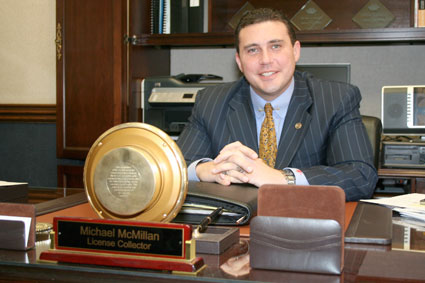
The whole debate over O'Brien (and the misdirected, but true frustration over a black mother with white looking children who saw them, and felt the world saw them, as black) made me wonder if the rules had changed for some people. Was black really black anymore? In St. Louis we have a city license collector who looks as white as any white man, but possesses a southern drawl and a demeanor that is everything of a black man. Is that O'Brien's crime? She doesn't ooze blackness? Because I'm black, visibly black, and I don't "ooze" blackness. But my race is not questioned because of that high visibility.

Is the problem that O'Brien isn't seen as a "real" black woman? That she couldn't have had endured a "real" black woman struggle because she is so light? Is this another variation of the "spectrum" warfare, the colorism that happens amongst black people? In a form of pre-rejection, where some blacks withholding their embrace of O'Brien because some lighter blacks rejected the darker in the past and present? To even the field a reversal must take place?

And if your mother is "black" as O'Brien considers herself, what are her children, who are blond haired and blue-eyed? Where does this fit when historically all it took was one Afro-Cuban grandmother to make you black? Does the rule no longer apply? Are their different rules for those who can "pass" and who can't? And is that rule based on how black you look, if you can pass and if you are perceived as benefiting from your "whiteness?"

And how much of this is about ego -- hers and ours? When a black person who could pass choses "us" I tend to look favorably on them. But is their endorsement an old lie based on outdated and outmoded beliefs? Can you be something other than black in America when you no longer look black in America?

I had a Great Great Aunt Josephine, and she, like many members of my father's mother's family were light enough to pass for white. Yet my great great aunt and her sisters and her nieces were vehement about their blackness. They would curse you out in an instant if you doubted who and what they were. They married the blackest men they could find. As did my father's mother, explaining why the light-bright-and-almost-white lineage ended with him and his brothers.

Yet at the same time, when it benefited them, they didn't exactly correct white people. My father is fond of telling a story where his Aunt Dinky, the only dark one out of his mother's sisters, drove my father and his brothers to Kansas to see their great-grandmother who was in the hospital and dying. Aunt Dinky told the taxi driver what house to take her to and the cabbie said no colored people lived in that neighborhood, but she insisted he take her anyway. Then when she told him what hospital to take her to, he said no colored people went to that hospital, she still insisted that was the right place to go.

Once inside the woman at the front desk repeated the same tired song. There were no colored people at this hospital, but Aunt Dinky looked down the hall and there was Aunt Josephine and her sisters. She told the attendant she saw her family and kept going. When Aunt Dinky told her aunts that they had the folks in the hospital thinking they were white, Aunt Josephine shot her down. Why would they think that, she said while her mother lied sick in a bed, whiter than any white woman.

My Aunt Josephine would fight you if you told her she looked white. But she knew she did and she embraced blackness anyway. There were pluses to being that light, but she still dealt with racism and the wary looks of blacks who doubted her. What about today?

Can Soledad O'Brien embrace blackness while not looking black, not "sounding" black and not being married to a black man? Can she embrace it with blond, blue-eyed children? Have the rules of blackness changed, or are we still playing the same psychological mind games we've always played when it has come to race in America?

I often say in America you are what you look like? But if you look white but call yourself black, what are you?

Celebrity Photos Fashion